Buying a home with poor drainage can lead to expensive repairs. In Eastern North Carolina—where lots are often flat and water tables can be high—drainage problems may contribute to foundation movement, crawlspace moisture, wood rot, mold growth, and long-term water intrusion issues.
If you’re buying, selling, or already own a home in Kinston, Greenville, Goldsboro, La Grange, Snow Hill, Trenton, Winterville, Vanceboro, Jacksonville, New Bern, Richlands (and surrounding areas), D & D Home Inspection Services can help you understand the risks and what to do next.
Call/Text: (252) 523-8255
Why Poor Drainage Is a Big Deal in Eastern NC
Drainage issues aren’t just “puddles in the yard.” Persistent water around a home can create hidden damage and indoor air quality problems. When water can’t move away from the structure, it often finds the easiest path—toward the foundation, into low crawlspaces, and through weak points in grading, gutters, and exterior drainage paths.
Common causes we see
- Improper grading: Soil slopes toward the home instead of away from it.
- Short or missing downspout extensions: Roof runoff dumps right at the foundation.
- Low spots and flat lots: Water ponds and lingers after rain.
- Clogged or undersized drainage features: Swales, catch basins, or drains that can’t keep up.
- High-risk flood areas: Some properties are located in mapped flood hazard zones and need extra due diligence.
Tip: Before closing on a home, check flood hazard information using official mapping tools like FEMA’s Flood Map Service Center and North Carolina flood-risk resources.
What Poor Drainage Can Do to a Home
1) Crawlspace moisture & structural concerns
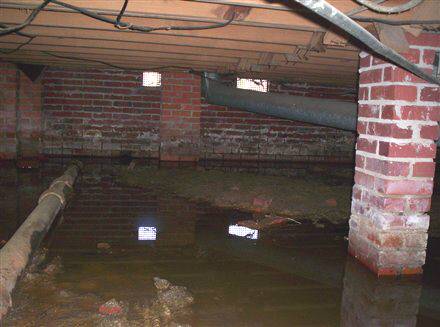
When the soil stays wet near the foundation, moisture often builds in crawlspaces. Over time, that can contribute to wood decay conditions, corrosion, insulation damage, and reduced energy efficiency. Excess moisture may also attract wood-destroying organisms and increase pest pressure.
2) Foundation movement and cracking
Water saturation can increase soil pressure at the foundation, and repeated wet/dry cycles can worsen settlement and movement. The result can be cracking, uneven floors, sticking doors/windows, and costly stabilization repairs.
3) Mold risk and indoor air quality problems
Moisture is the #1 driver behind mold growth. If damp materials aren’t dried quickly, mold can develop and circulate through the home—especially when HVAC systems pull air from crawlspaces or wall cavities. EPA guidance emphasizes that controlling moisture is the key to preventing mold issues.
4) Flooding and water intrusion
Poor drainage can increase the likelihood of water entering the crawlspace, garage, or lower living areas during heavy rain. Even “minor” repeated water intrusion can create long-term damage.
Warning Signs of Poor Drainage (What to Look For)
- Standing water near the foundation more than 24–48 hours after rain
- Soil erosion, washouts, or exposed roots along the foundation line
- Water stains on foundation walls, vents, or crawlspace materials
- Musty odors inside the home (especially near floors or HVAC returns)
- Efflorescence (white powdery residue) on masonry
- Soggy insulation, rust on HVAC components, or condensation in crawlspaces
- Mildew growth on exterior siding or shaded areas that never dry out
Practical Fixes (General Guidance)
Drainage corrections vary by property. The goal is always the same: move water away from the home quickly and safely. Here are common solutions used by homeowners and contractors:
Exterior drainage improvements
- Regrading: Adjust soil so it slopes away from the foundation.
- Downspout extensions: Carry roof runoff away from the structure.
- Swales / surface channels: Redirect water across the yard.
- Drainage systems: In some situations, a French drain may be recommended to intercept subsurface water and redirect it to a safe discharge location (installed correctly with appropriate slope and filtration fabric).
Note: If drainage is near the home, North Carolina State University Extension commonly advises investigating drainage systems around the foundation to help keep soils from staying saturated near the structure.
Crawlspace moisture control
- Vapor barrier improvements and sealed penetrations
- Properly sized dehumidification where appropriate
- Drainage corrections to prevent re-wetting and recurring humidity
Important: D & D Home Inspection Services does not provide engineering design. If significant movement, chronic flooding, or structural damage is suspected, we may recommend consultation with a qualified contractor and/or structural engineer for repair design.
How a Home Inspection Helps You Make the Right Decision
A professional home inspection can help you identify drainage red flags before they turn into surprise repair bills. During an inspection, we evaluate visible site conditions and look for signs of moisture intrusion that may relate to drainage.
- Site grading observations and water management concerns
- Foundation and structural indicators potentially associated with moisture
- Crawlspace conditions (moisture staining, ventilation, vapor barrier conditions)
- Interior signs of water intrusion (staining, odors, materials deterioration)
- Risk guidance on next steps (specialty evaluations, mitigation priorities)
We serve buyers and homeowners across Eastern NC, and our inspection reports include clear photos and practical recommendations.
Frequently Asked Questions About Poor Drainage
How do I know if a home has poor drainage?
Look for standing water after rain, erosion near the foundation, mildew on exterior surfaces, musty odors indoors, and moisture staining in crawlspaces. A home inspection can help identify visible risk indicators and recommend next steps.
Is standing water in the yard always a problem?
Not always—but if water repeatedly ponds near the foundation or stays for long periods, it can increase the risk of moisture intrusion, crawlspace humidity, and long-term damage.
Can poor drainage cause mold?
Yes. Drainage issues can keep materials damp, which increases the likelihood of mold growth. EPA guidance emphasizes that controlling moisture is the key to controlling mold.
Why is drainage such a common issue in Eastern North Carolina?
Many areas in the Coastal Plain have flatter terrain and higher water tables, which can make water slower to drain away after storms. Local conditions vary by neighborhood and lot grading.
Should I check flood maps before buying?
Yes. Use official tools to understand mapped flood hazards and discuss insurance requirements with your lender/agent if applicable. FEMA’s Flood Map Service Center is a widely used resource.
What’s the fastest way to reduce drainage problems near the foundation?
In many cases, improving grading and extending downspouts away from the home are quick wins. More complex cases may require engineered drainage solutions.
Do gutters really matter for drainage?
Absolutely. A roof sheds a lot of water. If gutters are missing, clogged, or dumping runoff at the foundation, it can worsen settlement and crawlspace moisture.
What is a French drain and when is it used?
A French drain is commonly described as a perforated pipe in a gravel trench designed to redirect subsurface water by gravity to a safe outlet. Proper slope and filtration details matter to reduce clogging and improve long-term performance.
Can poor drainage damage a crawlspace?
Yes. Chronic wet conditions can lead to high humidity, insulation damage, wood decay conditions, and corrosion of metal components. It can also worsen indoor air quality concerns.
Will a home inspection tell me exactly how to fix drainage?
A home inspection helps identify visible drainage risk factors and related damage indicators. Repair design (especially for major drainage or structural concerns) is typically performed by qualified contractors and/or engineers.
What should I do if I smell musty odors inside the home?
Musty odors can indicate elevated moisture or microbial growth. The priority is to identify and correct the moisture source, then address affected materials. EPA guidance focuses on moisture control as the foundation of prevention.
Do you service Kinston and surrounding towns?
Yes. D & D Home Inspection Services serves Kinston and many surrounding Eastern NC communities including Greenville, Goldsboro, La Grange, Snow Hill, Trenton, Winterville, Vanceboro, Jacksonville, New Bern, and Richlands.
Schedule a Home Inspection in Eastern North Carolina
If you’re concerned about poor drainage, don’t guess—get clear answers. D & D Home Inspection Services provides detailed inspections that help you understand moisture risks before you buy, and prioritize the right fixes if you already own the home.
- Detailed photo documentation
- Clear, practical recommendations
- Service throughout Eastern NC
Call/Text: (252) 523-8255
Request an inspection:
https://ddhomeinspectionservices.com/request-a-home-inspection.html
Related services you may want to explore:
Mold Testing |
Roof Inspection |
Plumbing Inspection |
Thermal Imaging